Start with your story.
56 real-life questions.
About 15 minutes.
FOR THE FUTURE YOU HAVEN’T MET YET
Your marks tell one story.
Let’s discover the rest of you.
Career discovery built around how you approach real situations—and what you could explore next.
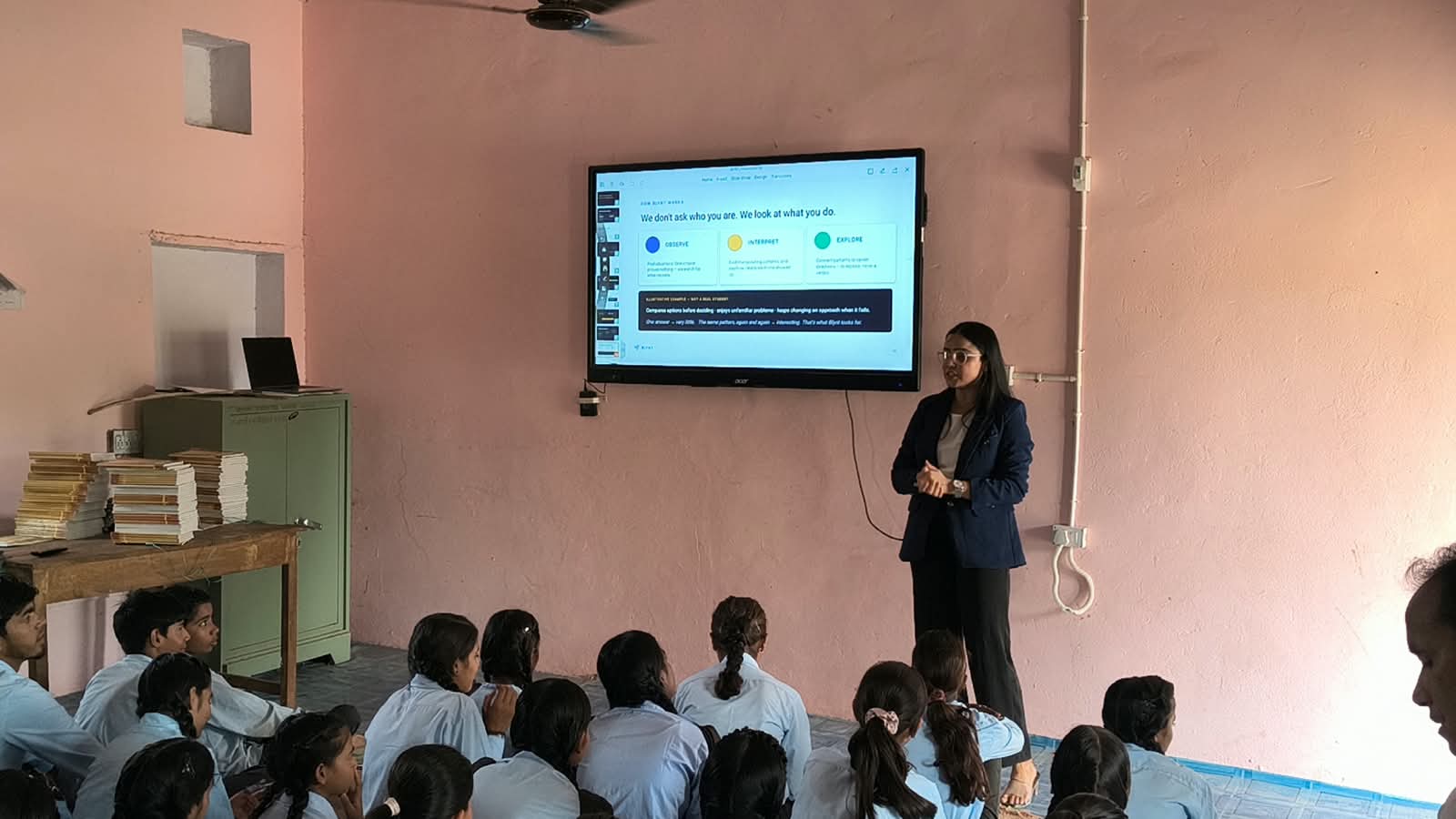 From the classroom to your next step.See Blynt in action ↗
Not sure what’s next?
That’s a good place to start.

FIRST, WHERE ARE YOU RIGHT NOW?
You don’t need a perfect answer.
Pick the question on your mind.
THE STREAM QUESTION
Explore how you work before choosing the subjects you’ll spend your days with.
See how discovery startsLESS “TELL ME ABOUT YOURSELF”
No labels. No marks.
Just situations that feel like real life.
A demonstration of the approach.
This single question does not assess or score you.
What would you feel like trying first?
HOW BLYNT CONNECTS THE DOTS
56 real-life questions.
About 15 minutes.
Your free behaviour profile.
Directions to explore.
Add a personal Blueprint.
A plan reviewed by a person.
YOUR FUTURE, MADE TANGIBLE
Tap through a sample Blueprint. See the pattern, explore the possibilities, find your next step.
TAP TO EXPLORE
A full Blueprint also considers subjects, marks, budget, location and family expectations.
01 / A PATTERN TO EXPLORE
Imagine a student who describes checking how something works before accepting an answer, and trying another approach when the first one fails.
That pattern gives us a reason to explore work involving investigation and problem-solving.
In a real result, the reasoning must trace back to that student’s answers. A pattern is a starting point, not proof of ability.
02 / POSSIBILITIES, WITH A REASON
Explore whether asking questions and checking evidence feels engaging. Try comparing a small public dataset.
Explore whether building and troubleshooting holds your interest. Make a simple working prototype.
These are illustrative directions, without ranking or match percentages. A full Blueprint includes five directions, with an alternative route.
03 / SMALL STEPS, BETTER EVIDENCE
Finish something in a direction you want to explore. Note what engaged or frustrated you.
Speak to two people doing this work. Ask about their ordinary working day.
Compare what you learned with course requirements, costs and another viable route.
BLYNT, IN THE CLASSROOM
Career discovery starts with showing up, listening and opening a conversation.
FOR PARENTS · माता-पिता के लिए
See what goes into your child’s Blueprint.
Talk to the Blynt team₹599. Five directions. A 90-day exploration plan. Reviewed by a person, with a section for your family.
Their answers + subjects + ambitions + your family’s practical constraints.
Patterns to explore, not a guaranteed career. Your child keeps the choice; your family gets a starting point.
आकलन मुफ़्त है। ₹599 के करियर ब्लूप्रिंट में टीम द्वारा समीक्षा की गई योजना मिलती है: तलाशने के लिए पाँच दिशाएँ, आगे बढ़ने के रास्ते, छोटे व्यावहारिक कदम और माता-पिता के लिए जानकारी।
बच्चे के जवाब, विषय, अंक, रुचियाँ, लक्ष्य, शहर और परिवार का बजट ध्यान में रखा जाता है। मकसद है परिवार के साथ मिलकर व्यावहारिक विकल्प तलाशना।
यह सोचने और काम करने के कुछ तरीकों पर चर्चा शुरू कर सकता है। यह नौकरी, दाखिले या वेतन की गारंटी नहीं देता। योजना को शिक्षकों की सलाह, परिवार की बातचीत और असली अनुभव के साथ इस्तेमाल करें।
START SMALL. CHOOSE WITH CLARITY.
Discover for free. Add a personal plan when you’re ready.
YOUR STARTING POINT
Explore the patterns in how you approach everyday situations.
Opens the existing Google Form. Need help with language or email? Contact us first.
BUILD YOUR NEXT CHAPTER
REVIEWED BY A PERSONA practical plan built around your answers and your real circumstances.
Already assessed? Your private result link leads to payment. Confirm delivery timing with the team before purchasing.
FOR SCHOOLS
A career conversation students can take home.
Plan a school seminar ↗Or email our team →No. It helps you explore directions and understand the reasoning behind them. Your decision should also consider experience, education requirements and conversations with people you trust.
It is a behaviour-based discovery assessment. It does not measure intelligence or aptitude, assign personality types, or predict success.
Please contact the team before filling in the form. The current result flow uses email. We can discuss arrangements with your parent or school; automatic WhatsApp and school PDF delivery are not yet offered by this page.
Yes. The parent explanation on this page is available in Hindi. For help with the assessment language, contact the team. A separate Hindi Google Form is not yet linked here.
Read our Privacy Policy for details on handling and access. Discuss any school delivery arrangement with the team before sharing student information. Avoid posting results in class groups.
Review the inclusions, confirm the delivery date and read our refund policy and terms. Ask the team if anything is unclear.
THE FUTURE ISN’T A SINGLE DOOR.
Discover. Decide. Design your future.